We remain fully operational. Our teams are working around the clock to ensure your deliveries continue safely.

DOWNLOAD THE APP


Customer Services
Copyright © 2025 Desertcart Holdings Limited
DOWNLOAD THE APP

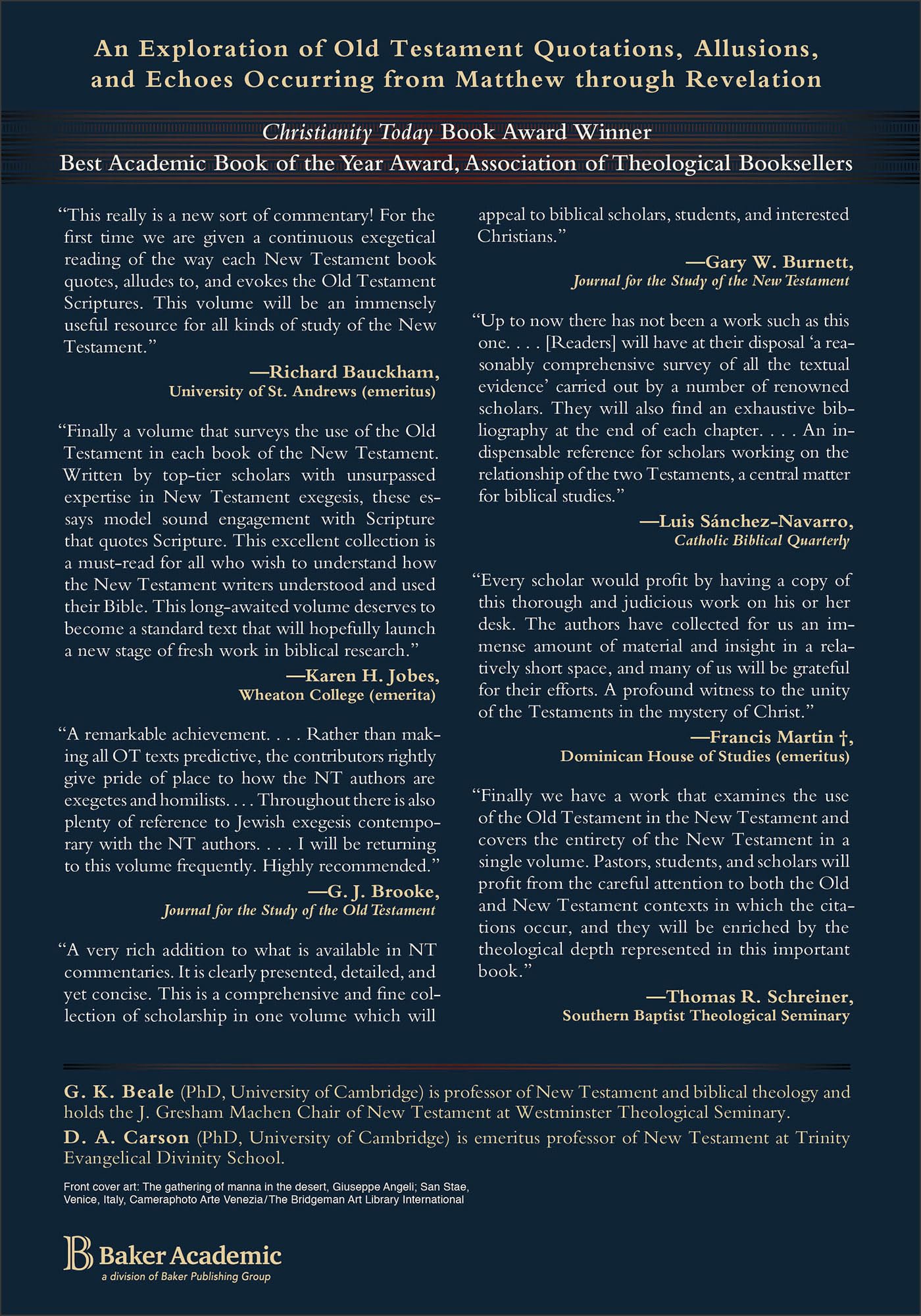
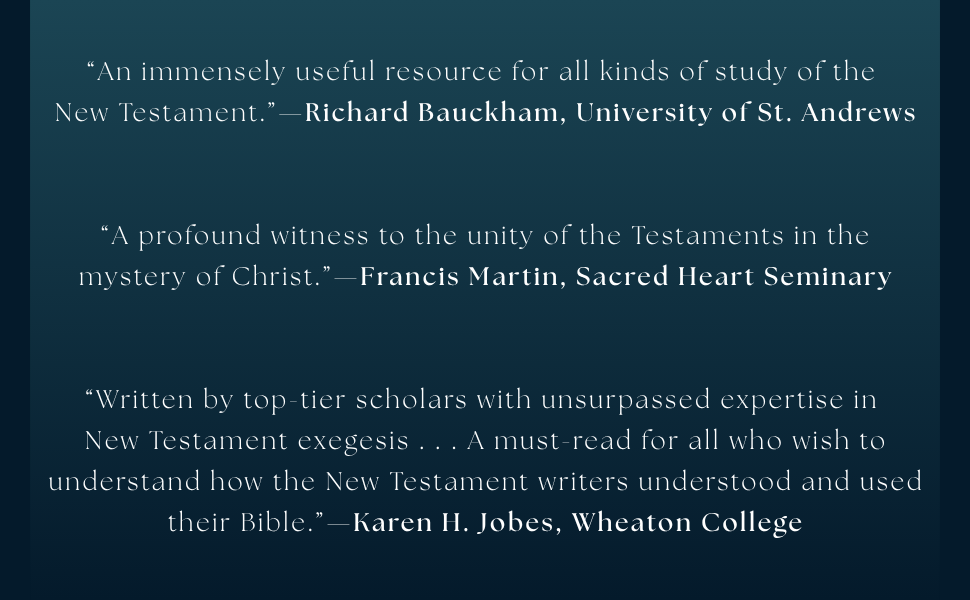
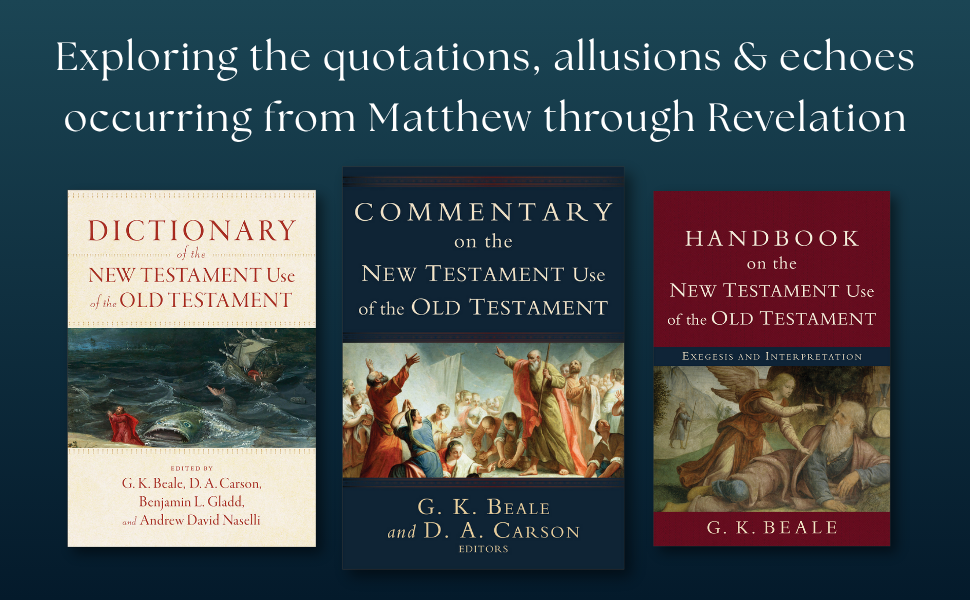
Commentary on the New Testament Use of the Old Testament: A Comprehensive Bible Commentary on Old Testament Quotations, Allusions & Echoes That Appear from Matthew through Revelation [D. A. Carson, Beale, G. K.] on desertcart.com. *FREE* shipping on qualifying offers. Commentary on the New Testament Use of the Old Testament: A Comprehensive Bible Commentary on Old Testament Quotations, Allusions & Echoes That Appear from Matthew through Revelation Review: Great Guide for Specialized Bible Study or Pastoral Use. - `Commentary on the New Testament Use of the Old Testament', edited by G. K. Beale and D. A. Carson supports the idea that given any approach to the examination of the New Testament you may think of, someone has written a book about it. And a superb book it is, if you have need for an examination of this subject from almost every angle. I say almost, because there is actually one thing I would like to have seen in this book, and it is not there. More on this anon. For the lay reader, be aware that this is a scholarly book, with all the Greek, Hebrew, Aramaic, and (I suspect) even Coptic terms used freely, just when I've gotten in the habit of tracking down Greek, I have to deal with two even more difficult languages. I mention that primarily for those who are allergic to footnotes and phrases in languages other than English. Otherwise, I am delighted in how easy the reading is in all the contributions from eighteen (18) major scholars on the New Testament. Much of this is attributable to the marching orders given to the writers by the two editors. This list of guidelines makes the diverse contributions very uniform, which contributes to the value of this book as the guide to a specialized type of Bible study based on this book's subject. Anyone who has tracked down more than a handful of OT passages used in the NT will realize that the NT writers often take some liberties with their interpretations, reading in a prophesy about Jesus which, in the original text actually referred to something completely different. And, one has also run across a wide range of different ways in which OT texts are used, from `exact' quotes to paraphrases to allusions. The editors address this range by asking all authors to address their OT citations from at least five different points of view. These are: 1. What is the NT context of the citation? What is the genre and literary structure of the book or chapter? 2. What is the OT context of the citation? Do these Markan citations come directly from Exodus, for example, or are they quoted from Isaiah's use of Exodus verses? 3. How was the OT quote handled or interpreted by Second Temple Judaism, or early Judaism in general? 4. From what text is the OT quotation copied. The Septuagint (LXX), the Masoretic text, or a Targum (scripture translated into Aramaic or Coptic). 5. What is the ultimate use or connection being made by the NT author's use of the OT. Is it simply to emote a connection, is it a use of a common OT idiom, is it a parable use, shorthand to evoking an OT story, or is there a belief that events in NT times fulfill a specific OT prophecy. Of course, many commentaries on individual NT books do this as well, but most do not go into detail on points 2, 3, and 4. In looking at those parts of the NT I know best, I find this book delivers everything it promises on these five points, but that the book cannot replace good commentaries and study Bibles for NT books. In looking at one of the most famous uses of OT scripture in Luke, at 4:18 - 19, where Jesus teaches from Isaiah 61:1 - 2, the authors, David Pao and Eckhard Schnabel cover all the editors' points admirably, including references to important opinions by famous scholars such as Rudolph Bultmann. For this passage and for all others in this chapter on Luke, the actual passage is NOT presented in any translation. Therefore, one has to have a copy of the Bible open to the passage, as you read the authors' interpretation of it. Less important is the fact that the explanation of this section of Luke on Jesus' teaching in the Nazareth synagogue says nothing about the puzzling climax, where the congregation turns on Jesus. But that is a logical limitation of the approach, and is not relevant to the subject of the book. The introduction to Lucan passages was illuminating, as it tells us that even though one of Luke's primary objectives was to show the resolution of OT prophesies, Luke actually uses fewer OT quotes than Matthew. This is rarely discussed in commentaries on Luke. So, especially with regard to the synoptic Gospels, this would be an excellent book to use as a guide to OT references in the NT. For the scholar, there is the usual tower of bibliographical references after each article, plus the usual index to Biblical citations at the back of the book. There was just one thing I wanted which is missing. This is a `reverse' index, if you will, of OT books, with the number and locations of where verses are cited in the NT. The reason for wishing such an index is as a guide to selecting which OT books may best be studied together, as with Luke and Deuteronomy (some commentators claim the 10 chapter journey of Jesus to Jerusalem is patterned after Deuteronomy). Ultimately, this is a great reference if you make a habit of studying NT scriptures in depth, as either a pastor or bible study teacher. Review: Most Amazing - To look at the New Testament through the same thought process of those that wrote it is nothing short of ingenious. It takes nothing away from the Word being written by the Holy Spirit through men. In fact, it adds to the validity of the cohesion between the Old and New Testament while giving insights rooted in God’s Word written centuries before the coming of Christ. It does include the Apocryphal books as well and it’s citations of OT are well documented to work both from the OT to the NT or from the NT to the OT which is the purpose of this book. I would highly recommend this book to anyone who desires to dig deeper into the thought process of God and move beyond the regular commentary process that tends to be limited to the author’s insights and singular theological perspective. Further, if you desire to answer the question of why is this written or how did this come to be, many passages point to multiple references from the OT giving substance to Paul’s letter to encourage a young pastor to hold onto what has been given to him. Not a new teaching as we would assume, but a correct understanding of the Hebrew Testament in light of Jesus death, resurrection, and ascension into the Ancient of Days court as described in Daniel 7. Jesus is clearly more than a teacher when viewed through the eyes of the Hebrew Testament, He is the second person of the Holy Trinity for which this Old Testament confirms multiple times over. The downside of this extensive commentary is the use of technical jargon and the assumption that the reader has fluency in Hebrew and Greek. However, if you are a student who sits in the front of the classroom because you want to learn more and miss nothing (and not up there because the teacher desires to keep a closer eye on you) this book will not disappoint you. On the contrary, you will find it’s usefulness beyond sermon and Bible Study preparation. You will get the opportunity to sit in the dirt and learn from the Master as Mary did and will find it is hard to move onto the rest of your list that needs to get done for the day.



| Best Sellers Rank | #45,882 in Books ( See Top 100 in Books ) #58 in New Testament Criticism & Interpretation #98 in Christian Bible Exegesis & Hermeneutics #193 in Christian Commentaries (Books) |
| Customer Reviews | 4.8 4.8 out of 5 stars (467) |
| Dimensions | 7.5 x 2 x 10.25 inches |
| Edition | unknown |
| ISBN-10 | 0801026938 |
| ISBN-13 | 978-0801026935 |
| Item Weight | 4.3 pounds |
| Language | English |
| Print length | 1280 pages |
| Publication date | November 1, 2007 |
| Publisher | Baker Academic |
B**D
Great Guide for Specialized Bible Study or Pastoral Use.
`Commentary on the New Testament Use of the Old Testament', edited by G. K. Beale and D. A. Carson supports the idea that given any approach to the examination of the New Testament you may think of, someone has written a book about it. And a superb book it is, if you have need for an examination of this subject from almost every angle. I say almost, because there is actually one thing I would like to have seen in this book, and it is not there. More on this anon. For the lay reader, be aware that this is a scholarly book, with all the Greek, Hebrew, Aramaic, and (I suspect) even Coptic terms used freely, just when I've gotten in the habit of tracking down Greek, I have to deal with two even more difficult languages. I mention that primarily for those who are allergic to footnotes and phrases in languages other than English. Otherwise, I am delighted in how easy the reading is in all the contributions from eighteen (18) major scholars on the New Testament. Much of this is attributable to the marching orders given to the writers by the two editors. This list of guidelines makes the diverse contributions very uniform, which contributes to the value of this book as the guide to a specialized type of Bible study based on this book's subject. Anyone who has tracked down more than a handful of OT passages used in the NT will realize that the NT writers often take some liberties with their interpretations, reading in a prophesy about Jesus which, in the original text actually referred to something completely different. And, one has also run across a wide range of different ways in which OT texts are used, from `exact' quotes to paraphrases to allusions. The editors address this range by asking all authors to address their OT citations from at least five different points of view. These are: 1. What is the NT context of the citation? What is the genre and literary structure of the book or chapter? 2. What is the OT context of the citation? Do these Markan citations come directly from Exodus, for example, or are they quoted from Isaiah's use of Exodus verses? 3. How was the OT quote handled or interpreted by Second Temple Judaism, or early Judaism in general? 4. From what text is the OT quotation copied. The Septuagint (LXX), the Masoretic text, or a Targum (scripture translated into Aramaic or Coptic). 5. What is the ultimate use or connection being made by the NT author's use of the OT. Is it simply to emote a connection, is it a use of a common OT idiom, is it a parable use, shorthand to evoking an OT story, or is there a belief that events in NT times fulfill a specific OT prophecy. Of course, many commentaries on individual NT books do this as well, but most do not go into detail on points 2, 3, and 4. In looking at those parts of the NT I know best, I find this book delivers everything it promises on these five points, but that the book cannot replace good commentaries and study Bibles for NT books. In looking at one of the most famous uses of OT scripture in Luke, at 4:18 - 19, where Jesus teaches from Isaiah 61:1 - 2, the authors, David Pao and Eckhard Schnabel cover all the editors' points admirably, including references to important opinions by famous scholars such as Rudolph Bultmann. For this passage and for all others in this chapter on Luke, the actual passage is NOT presented in any translation. Therefore, one has to have a copy of the Bible open to the passage, as you read the authors' interpretation of it. Less important is the fact that the explanation of this section of Luke on Jesus' teaching in the Nazareth synagogue says nothing about the puzzling climax, where the congregation turns on Jesus. But that is a logical limitation of the approach, and is not relevant to the subject of the book. The introduction to Lucan passages was illuminating, as it tells us that even though one of Luke's primary objectives was to show the resolution of OT prophesies, Luke actually uses fewer OT quotes than Matthew. This is rarely discussed in commentaries on Luke. So, especially with regard to the synoptic Gospels, this would be an excellent book to use as a guide to OT references in the NT. For the scholar, there is the usual tower of bibliographical references after each article, plus the usual index to Biblical citations at the back of the book. There was just one thing I wanted which is missing. This is a `reverse' index, if you will, of OT books, with the number and locations of where verses are cited in the NT. The reason for wishing such an index is as a guide to selecting which OT books may best be studied together, as with Luke and Deuteronomy (some commentators claim the 10 chapter journey of Jesus to Jerusalem is patterned after Deuteronomy). Ultimately, this is a great reference if you make a habit of studying NT scriptures in depth, as either a pastor or bible study teacher.
D**J
Most Amazing
To look at the New Testament through the same thought process of those that wrote it is nothing short of ingenious. It takes nothing away from the Word being written by the Holy Spirit through men. In fact, it adds to the validity of the cohesion between the Old and New Testament while giving insights rooted in God’s Word written centuries before the coming of Christ. It does include the Apocryphal books as well and it’s citations of OT are well documented to work both from the OT to the NT or from the NT to the OT which is the purpose of this book. I would highly recommend this book to anyone who desires to dig deeper into the thought process of God and move beyond the regular commentary process that tends to be limited to the author’s insights and singular theological perspective. Further, if you desire to answer the question of why is this written or how did this come to be, many passages point to multiple references from the OT giving substance to Paul’s letter to encourage a young pastor to hold onto what has been given to him. Not a new teaching as we would assume, but a correct understanding of the Hebrew Testament in light of Jesus death, resurrection, and ascension into the Ancient of Days court as described in Daniel 7. Jesus is clearly more than a teacher when viewed through the eyes of the Hebrew Testament, He is the second person of the Holy Trinity for which this Old Testament confirms multiple times over. The downside of this extensive commentary is the use of technical jargon and the assumption that the reader has fluency in Hebrew and Greek. However, if you are a student who sits in the front of the classroom because you want to learn more and miss nothing (and not up there because the teacher desires to keep a closer eye on you) this book will not disappoint you. On the contrary, you will find it’s usefulness beyond sermon and Bible Study preparation. You will get the opportunity to sit in the dirt and learn from the Master as Mary did and will find it is hard to move onto the rest of your list that needs to get done for the day.
F**Y
Essential Commentary, I Use it Every Time
I won't write an exhaustive review, but I can easily commend this commentary to any seminary student by saying this: it goes into my pile of reference books for nearly every paper I write, on any subject. It's always relevant. If I'm dealing with any New Testament text, it's worth looking up in this commentary to see if it has an OT basis, if it's an allusion, a quote, or something similar. This adds dimensionality and thoroughness to my treatment of the NT, putting it in perspective. There is a similar volume, which I use just as often, called 'Commentary on the Old Testament Use of the Old Testament.' For OT studies, I use it along with 'The Context of Scripture' (which is basically ANET with cross-indexed biblical passages and ancient texts). There have been a few times when I've followed the chain all the way from NT text -> NT use of OT -> OT text -> OT use of OT -> Context of Scripture. If you're a Bible nerd, you can imagine this is basically cause to run around the neighborhood six times shouting 'Hallelujah' while the neighbors scratch their heads or close their blinds. I use this book as much as NICNT for NT studies, which is to say, any time I study the NT. This commentary is amazing, it earns its footprint on my booksehelf. Absolutely recommend it.
B**N
A much needed resource!
A phenomenal and much needed resources for the church today! I am delighted that it is now part of my theological library.
L**K
I have been using this volume for more than 2 years and I would say it is a must-read for everyone who wants to understand how the New Testament writers used and understood their Scriptures we call the Old Testament now. It definetely helps to study the New Testament. The book provides more information than its title promises for many extrabiblical (Mishnah, Talmud ...) texts are used.
S**L
It's just an outstanding commentary on the NT use of the OT. God's Word is mis-interpreted when one takes the verse out of context or 'asaumes' what a passages must be saying. Many are prone to use a bible concordance (mostly from a chain-referance bible) and mis-quote, mis-interpret, and mis-apply the Truth. This book provides almost an exaustive study on how each books of the NT quotes, alludes, and apply the OT. Easy to understand, easy to follow, and a great help personally to me and am sure, if you get one, you will never regret. Sadly, the copy I got was slightly damaged. But the content of the book bypassed even that. Thank you, Dr. Carson and Dr. Beale for gathering this treasures and making it available to the church!!
M**E
Excellent resource for Bible study and sermon preparation.
P**U
H**L
Handwerkzeug für den Theologen Dieses Buch gehört zum Grundbestand meiner Theologen-Bibliothek. Ich habe es zuerst dreimal getestet, indem ich bestimmte Stellen in der Bibliothek nachschlug. Zudem ging ich ein ganzes Bibelbuch (Jesaja) anhand der Häufung der Erwähnungen im Bibelstellenregister durch. Nachdem die grundsätzliche Beziehung zwischen Altem und Neuem Testament geklärt ist - sie besteht, wie Mark Dever in Der große Plan. Von Gott. Für uns. schlüssig darstellt, in einem Verhältnis von Verheissung zu Erfüllung. Das Alte ist also durch die Brille des Neuen Testaments zu lesen - und keinesfalls umgekehrt. Dieses Werk hilft uns bei der Frage, wie wir dies tun können. Sämtliche Zitate und Anspielungen werden systematisch betrachtet. Schon wer einzelne Teile durchblättert, wird schnell feststellen: Die Vernetzung ist sehr dicht. Feine Fäden werden überallhin gesponnen. Das wiederum bedeutet, dass wir auf der einen Seite genug weit gehen sollen, jedoch nicht zu weit. Hierin ist das 1200 starke Buch eine grosse Hilfe. Ein Beispiel: Kolosser 3,9-10 Erschaffung/Neuschaffung des Menschen in Gottes Bild Der Autor, G. K. Beale, bringt sofort Kol 1,6+10 (Frucht bringen und wachsen) ebenfalls mit dem Schöpfungsbericht in Zusammenhang, ebenso mit Kol 1,15, wo Christus als Bild des unsichtbaren Gottes vorgestellt wird. Er spannt dann den heilsgeschichtlichen Bogen, indem er die Aufgabe des Menschen entfaltet, Gottes Herrlichkeit zu reflektieren. In der neuen Schöpfung geschieht das durch die Identifikation des neuen Menschen mit Christus. In der Einleitung stellen die beiden Editoren, G. K. Beale und D. A. Carson, die sechs Vorgaben an die Autoren vor: 1. Darstellung des NT-Kontexts 2. Darstellung des AT-Kontexts inkl. Entwicklung innerhalb des AT 3. Umgang und Interpretationen im Judentum des zweiten Tempels 4. Verwendete Textvorlage(n), z. B. Septuaginta oder Masoretischer Text (MT) 5. Der genaue Gebrauch im NT (z. B. in Form eines Erfüllungszitats) 6. Der theologische Gebrauch (z. B. der direkte Bezug von Jahwe zu Jesus) Die Editoren weisen zudem auf einige Charakteristiken der Zitate hin: 1. Es existiert bezüglich Zitaten eine erstaunliche Breite. Man bedenke dabei Matthäus, Kolosser und die Offenbarung! 2. Mit Leichtigkeit wird Jahwe mit Jesus, Israel mit der Kirche oder Israel mit Jesus identifiziert. 3. Der heilsgeschichtliche Rahmen der NT-Schreiber beeinflusste diese bei der Interpretation des AT. 4. AT Texte werden so angewandt, dass sie nur im NT-Kontext verständlich werden. Fazit Leider wird das Alte Testament unter Christen stark vernachlässigt. Es erscheint uns als ein ödes Land mit langen unfruchtbaren Strecken. Viele ziehen sich aus dem Terrain zurück. Damit verlieren sie aber Wesentliches im Neuen Testament. Dieses bezieht sich auf Schritt und Tritt auf das Alte Testament. Wer diesen Querverbindungen nachgehen will (und im Falle des Predigers soll!), dem leistet dieses Werk unschätzbare Dienste.
Trustpilot
1 month ago
1 month ago