Buy anything from 5,000+ international stores. One checkout price. No surprise fees. Join 2M+ shoppers on Desertcart.
Desertcart purchases this item on your behalf and handles shipping, customs, and support to Grenada.
โก Diagnose like a pro โ never replace a capacitor blindly again!
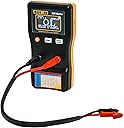
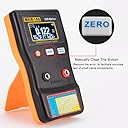
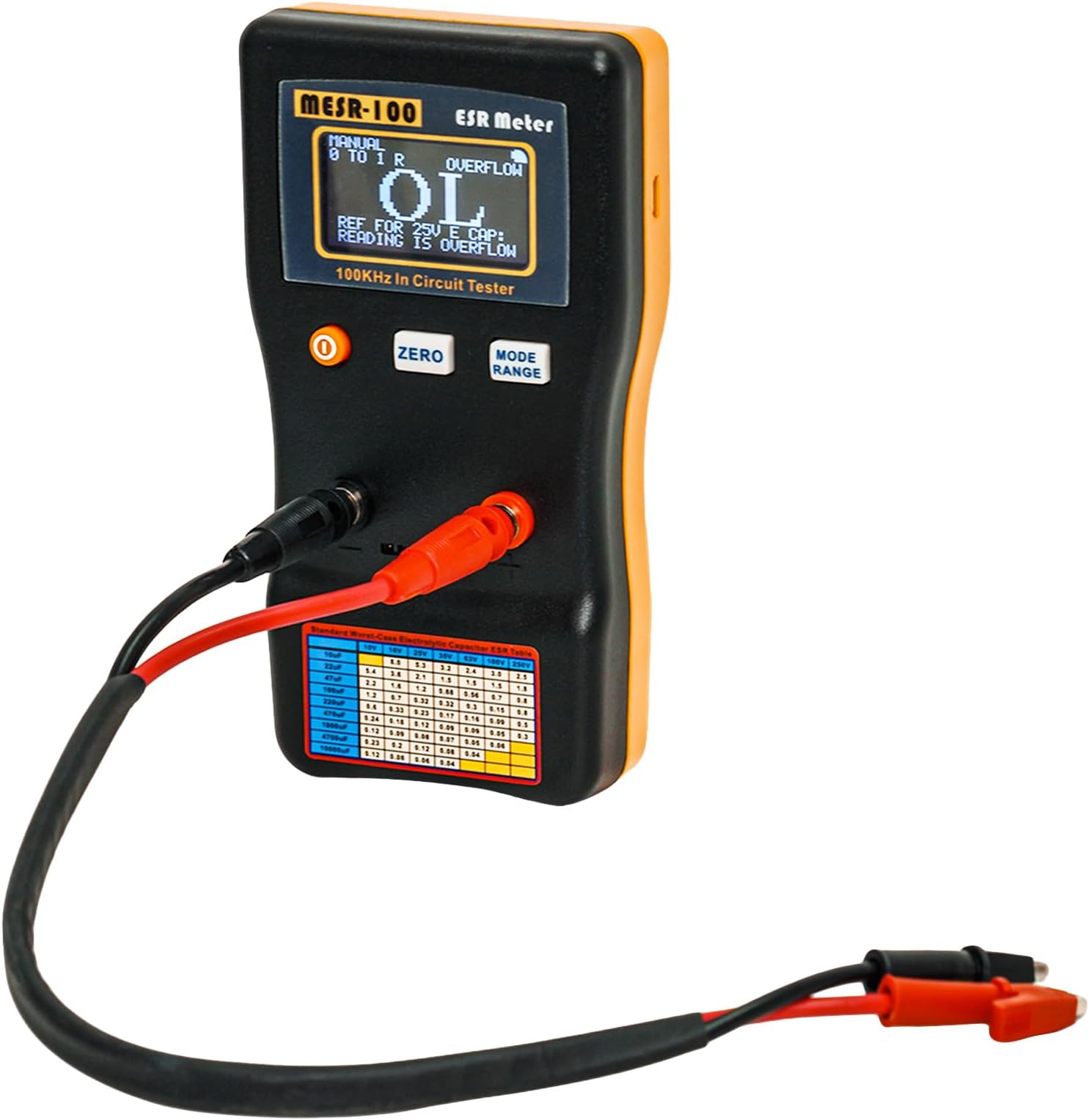
The Signstek MESR-100 V2 is a professional-grade, battery-powered ESR and low ohm meter designed for fast, in-circuit capacitor and resistor testing. Featuring auto-ranging capability and a wide measurement range from 0.01 to 100ฮฉ, it delivers reliable, repeatable results without the need to desolder components. Its compact 8oz form factor and built-in ESR reference table make it an indispensable tool for electronics repair professionals seeking efficiency and accuracy.


| ASIN | B00GYSFOM6 |
| Best Sellers Rank | #29,810 in Industrial & Scientific ( See Top 100 in Industrial & Scientific ) #2 in Capacitance Meters |
| Brand | Signstek |
| Brand Name | Signstek |
| Color | Black |
| Customer Reviews | 4.4 out of 5 stars 717 Reviews |
| Item Weight | 0.5 Pounds |
| Manufacturer | Signstek |
| Measurement Type | LCR Meter |
| Min. Operating Voltage | 15 Millivolts |
| Minimum Operating Voltage | 15 Millivolts |
| Model | US-171024-02 |
| Part Number | US-171024-02 |
| Power Source | Battery Powered |
| Style | Circuit Testers |
| Style Name | Circuit Testers |
| UPC | 710219731090 |
| Unit Count | 1.0 Count |
G**R
This is a great tool for troubleshooting and saves me a lot of ...
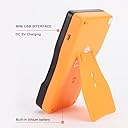
I do electronics repair as a second job. This is a great tool for troubleshooting and saves me a lot of time. Bad capacitors are a frequent problem but they are difficult to test and I don't have the time to just replace every capacitor I run across on finicky equipment. PROs: Tests capacitors better than a multimeter without having to desolder them. Posts the results in plain English as well as the numeric readings. It's reliable. I have tested quite a few capacitors so far and the results so far are accurate and repeatable. It's inexpensive. I shopped around for a quality ESR and found that units typically cost more than this, have to ship from China or Russia, and frequently don't have as many features. CONSs: The battery door is difficult to get to. The stand is in the way. It's a minor hassle. I plan to just remove the stand entirely as I do not use it. It's not extremely precise, particularly on small capacitors. Caps below a certain point you have to look up on a table (which is handily printed on the unit). The numbers can vary a little but not enough to make a difference for what I'm testing. All I want to know is the answer to one question: "Is this a good cap?" It's precise enough to be accurate in answering this question and that is all I care about.
J**.
A Tool That Actually Tells Me Which Caps Are Bad (Without Guessing)
What Makes It So Useful (For Real Work) The biggest win for me is in-circuit ESR testing. I donโt have to desolder every capacitor just to check if itโs bad. I can probe directly on the board and get a solid answer in seconds. That alone saves a ton of time. It uses a ~100kHz test signal, which is important because it matches how capacitor ESR is actually measured in real applications . Why I Trust It More Than a Multimeter A regular multimeter might tell me capacitanceโbut that doesnโt tell the full story. This meter shows ESR (internal resistance), which is usually what actually fails in caps over time. Low ESR โ good cap High ESR โ bad cap (even if capacitance looks fine) Thatโs huge when troubleshooting unstable power supplies. Where It Helped Me Most Iโve used it for: Xbox PSU repairs (huge here) Motherboards and GPUs Old TVs / monitors Random SMPS boards Itโs especially useful when Iโm chasing intermittent issues or unstable voltage rails. Fast, Simple, and Repeatable No menus, no complicated setup: Touch probes โ instant reading Auto-ranging handles everything Built-in ESR chart helps quick comparison It measures roughly 0.01โ100ฮฉ, which covers most real-world capacitor failures
W**I
excellent, but leads too short
Works well to identify defective capacitors. As many people have said, the leads are not just too short, they are tied to close to one another. The leads need another 4" and the separation needs to be another 2" to be able to get to awkward connections.
R**.
A great meter for testing capacitors.
I have used this meter now to test over 500 capacitors and it has performed flawlessly. The only situation I would advise users of is not to relay only on the auto-ranging capability of the meter. Auto-range works great but for some capacitors the ESR is close to the limit of two ranges and the meter will jump back and forth trying to resolve the resistance. If this occurs simply press the mode range button once or twice until the reading stabilizes. This meter can be used for in-circuit testing of capacitors as well but so far I have not needed it for that.
O**S
Great value for the money
I'm am amateur at repairing circuits, but this device is great for testing capacitors in circuit which is very helpful. I've already repaired a few devices with it by finding bad caps. The only tricky issue with this tester are the short leads which others have pointed out, but that is due to it being so sensitive that the leads must be short for it to work. You can snip off a short piece of wire and put in each alligator clip to make the test leads a little more useful for getting in hard to reach areas. Overall this tester is a must have for doing any circuit repair, especially looking for bad caps.
D**B
No more desoldering pointless capacitors that are actually fine!
This device has truly simplified the task of testing capacitors that are part of a circuit. It's the go-to solution if you don't want to go through the hassle of desoldering components just to perform a basic capacitor check. The auto-ranging feature is a lifesaver, making it incredibly easy to measure the Equivalent Series Resistance (ESR) and inductance (LCR) of capacitors while they're still soldered in. This is a game-changer for troubleshooting circuits and identifying faulty capacitors quickly and efficiently. Gone are the days of traditional, time-consuming desoldering and testing methods. The Signstek offers precision and convenience in one package, making it an invaluable tool for electronics enthusiasts and professionals. It has truly revolutionized the way we diagnose and maintain circuits, sparing us from the painstaking desoldering process. If you work with electronics and need to test capacitors in-circuit, this meter is a game-changer.
L**D
MESR-100 V2 Auto Ranging ESR Meter
I have many pieces of electronics that stopped working. Sound Bar, Electronic Whoopers, Sirens used in security protection systems plus a number of others. I don't have the time to spend diagnosing their problems because it is much simpler and faster to just go out and buy another one. One day while watching a You Tube video on electronics repairing for the non-professional, the host was demonstrating the use of this Signstek MESR-100 Ver2 ESR Meter with in-circuit testing. He stated that quite often that electronic equipment fails or failed because electrolytic capacitors were the culprit and this meter can check each capacitor in-circuit - which means I wouldn't have to remove each one to check it. Wow, my first impression was now I can repair the above quickly and save money in the process. Well, I didn't find (not one) failing or failed capacitor. OK, I must admit the cables are far to SHORT in length. I was dragging the meter all over the circuit boards attempting to check each capacitor. Each time I would finally make contact with (cable probes to a capacitor) the short cables turned the meter upside down or on its side to prevent me from seeing the display which would define information I need to determine if the capacitor was good or bad. This occurred too many times at which I promptly put the meter and cables back in the box and put it away. The cables make testing electrolytic capacitors a "NIGHTMARE" in circuit. Testing out of circuit is just fine and the meter tested every good electrolytic capacitor I had correctly. So, if the cables were longer this meter would probably warrant a five. Again, the meter appears to be a "near professional instrument" except for the cables which defeats the whole purpose of using it... in-circuit. Also, I believe the instructions have a statement to not substitute the cables supplied with longer ones. I am hoping either the manufacturer or a professional electronic technician will offer a solution for longer cables that would make this meter an excellent tool for diagnosing bad electrolytic capacitors in-circuit.
B**.
Will tell you if your capacitor is bad
This is really easy to use!
T**T
Works very well!!
Love this thing, but the leads slip around when trying to clamp them and they are very short they should be longer and have the ability to put tiny probes on as well!!
Trustpilot
1 month ago
2 weeks ago