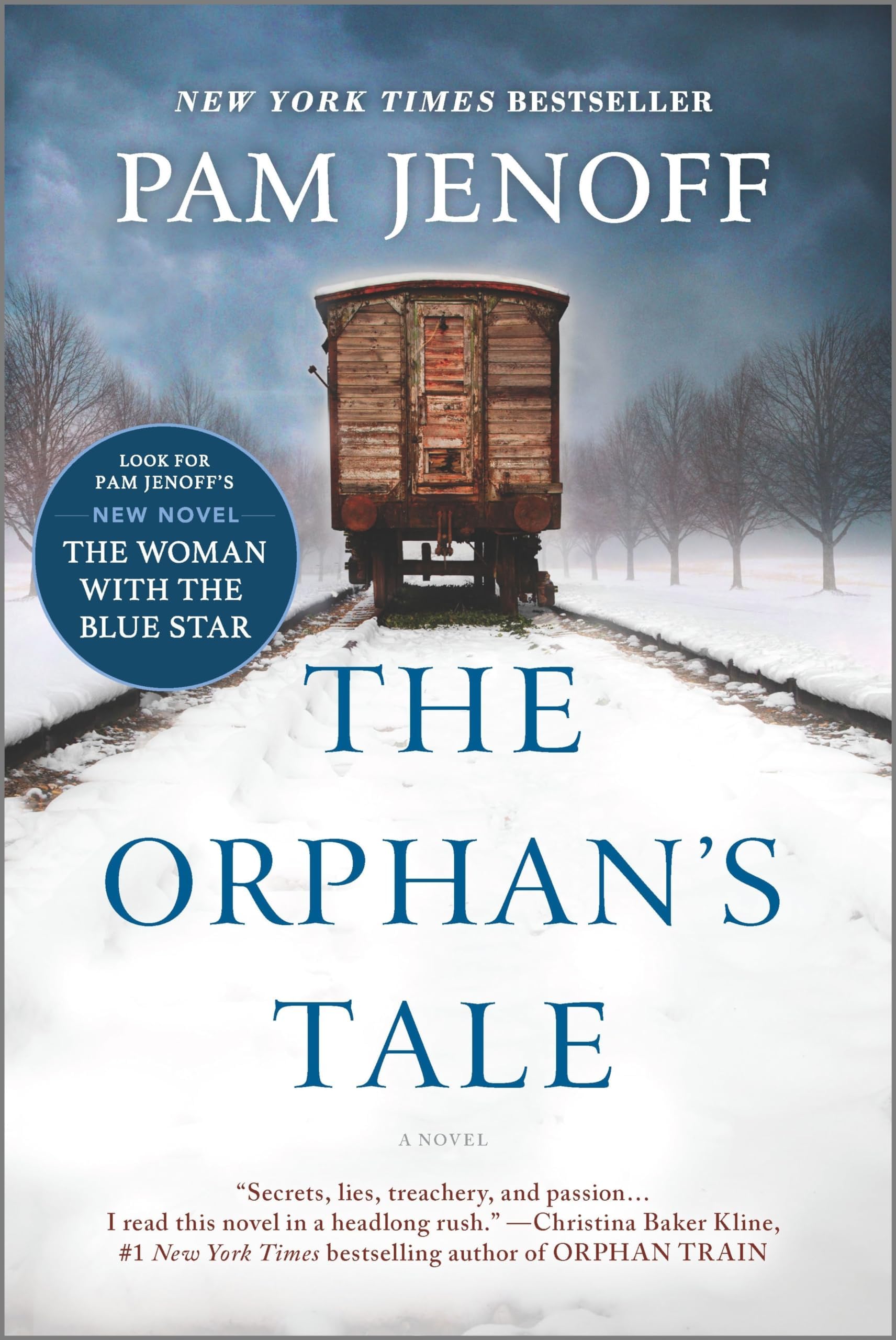
The Orphan's Tale: A Novel – A NYT Bestseller Historical Fiction Story of WWII Survival
Product ID: 40943208
Desertcart purchases this item on your behalf and handles shipping, customs, and support to Grenada.
Look for Pam Jenoff’s new novel, The Woman with the Blue Star , an unforgettable story of courage and friendship during wartime. A New York Times bestseller! “Readers who enjoyed Kristin Hannah’s The Nightingale and Sara Gruen’s Water for Elephants will embrace this novel. “ — Library Journal “Secrets, lies, treachery, and passion…. I read this novel in a headlong rush.” —Christina Baker Kline, #1 New York Times bestselling author of Orphan Train A powerful novel of friendship set in a traveling circus during World War II, The Orphan’s Tale introduces two extraordinary women and their harrowing stories of sacrifice and survival. Sixteen-year-old Noa has been cast out in disgrace after becoming pregnant by a Nazi soldier and being forced to give up her baby. She lives above a small rail station, which she cleans in order to earn her keep… When Noa discovers a boxcar containing dozens of Jewish infants bound for a concentration camp, she is reminded of the child that was taken from her. And in a moment that will change the course of her life, she snatches one of the babies and flees into the snowy night. Noa finds refuge with a German circus, but she must learn the flying trapeze act so she can blend in undetected, spurning the resentment of the lead aerialist, Astrid. At first rivals, Noa and Astrid soon forge a powerful bond. But as the facade that protects them proves increasingly tenuous, Noa and Astrid must decide whether their friendship is enough to save one another—or if the secrets that burn between them will destroy everything. Don’t miss Pam Jenoff’s new novel, Last Twilight in Paris , a gripping mystery and an unforgettable story about love and survival. Read these other sweeping epics from New York Times bestselling author Pam Jenoff: Code Name Sapphire The Lost Girls of Paris The Woman with the Blue Star The Ambassador’s Daughter The Diplomat’s Wife The Last Summer at Chelsea Beach The Kommandant’s Girl The Winter Guest Review: LOVED it - I think NPR said it best: "Christina Baker Kline's ‘Orphan Train’ has collided with the circus caravan from Sara Gruen's ‘Water for Elephants,’ and out of wreck has come Pam Jenoff's ‘The Orphan's Tale.’ The novel is a magical carnival saga, a bit grittier than either of its antecedents, and with more at stake...Jenoff has written a tribute to the human spirit that soars in the midst of epic despair." And I ask you, “How could I pass this up?” In short, I didn’t. I quickly moved this one up to the top of my TBR pile and dug right in. We start with a prologue where an elderly woman makes her way into a new exhibit on European circuses. Based on the dust jacket, I know that it’s either Noa or Astrid. By the time I reached the prologue’s end, I was hooked. Then the story moves back in time to Germany, 1944. When Noa is sixteen, she is kicked out of her parents’ home when she discovers she is pregnant by a German officer. While we only see her after she has given up her baby, we see that she has lost none of that innocence that got her in the family way. Noa is cleaning a train station and lives in a closet. One night, a train pulls in. Thinking she hears a baby crying, Noa inspects the boxcars and finds a horrific sight. One of the cars’ floor is covered with babies, none more than two years old. Most are dead, frozen, but she pulls one out. Taking the child, she runs away in the middle of a blizzard. She is found by Astrid and is taken in. Astrid is one of Europe’s leading aerialists, but with a war raging, she is not with her family circus. Instead, she is with her neighbor’s family circus. The Neuhoff Circus needs another aerialist, so Noa must take to the trapeze to earn her place in these strangers who become family. The young women become close. Almost as if they were sisters, watching out for each other. Noa kept the baby she stole and named him Theo. One of the major hurdles that they face, is that Astrid is Jewish. The story is the tale of the circus and its people. I loved reading about how Astrid trained Noa and circus life in the 1940s. The book ends with an epilogue that gives complete closure to all the supporting characters. It was nice to learn their fate. The story did get sluggish in the bottom part of the first third. I wanted to give The Orphan’s Tale receives 6 stars, but that blip caused me to award 5 out of 5 stars in Julie’s world. Review: Wake up "dream team." - Reviewer: D. Goin Pam Jenoff calls the folks at MIRA books her "dream team." Well, she'd better wake them up, because they let slip by--what? Call them style quirks-- and errors that, like leeches, suck blood from and bog dowm one of the best stoties I have read in yeatrs. Ms. Jenoff is clearly a great story teller, who has researched her work well and drawn her characters finely. One cam see, hear, smell, feel and even taste her scenes. Yet, I can agree with some of the one-star reviewers who call the tale boring. To me, "boring" is a bit harsh. Yet, one does become weary spending so much time in Noa and Astrid's heads, listening to backstory repeated endlessly and hearing for the umpteenth time how guilty Noa feels about lying about her past. We get it, okay? I mentioned style qrirks. Both Noa and Astrid appear to be all-knowing, forever in terpreting what other characters say. For ecample, Noa is the poin-of-view character observing Peter and Astrid. Peter says somerhing to. Astrid and Noa notes, "But she (Astrid) turns away from him, her pride too hurt to let him close." How in the world can Noa know why Astrid turns away. Noa might say, "But she turned away, as if her pride..." This psychoanaalysis by POV characters goes on throughout the book, imparting the wiadom of the author rather than of the characters. Another style quirk thar makes no sense to me is the interruption of dialogue to get back i nto the POV character's head. For example, in a scene where Astrid is the POV character and where Noa suggests she and Astrid help the workers putting up the tent, Astrid shakes her head and says, "No, let them do their work." Then we go into Astrid's head, when she thinks the following: We can no more help raise the tent than the workers can swing from the trapeze. Why not make this last sentence part of her response to Noa, which would, as dialogue always does, allow deepening characters and the conflict between them? Above, l also mentioned errors. I will point out two of the most prevalent: First, showing and telling at the same time. Showing is always better, but certainly not both. For example, in a scene where the police are arresting an old man and his granddaughter, the old man stalls for time "The policeman will hear none of it." (telling) "'Now," says the policeman. (showing). Telling is heavy-handed throughout the story. The second and more egregious error involves getting the past tense of verbs mixed up with the past perfect (pluperfect) tense. This happens frequently. For example, Astrid thinks, "I see his face more vividly than I had in months." This should read "...than I have in months." To use "had," she would need to establish a past event, before which something happened. She could think, for example, "I saw his face clearly, yesterday. I had not thought of him for months before that." Enough! This is a damn fine story I recommend it and plan to read more of Pam Jenoff's work. But please, dream team, wake up!


| Best Sellers Rank | #62,481 in Books ( See Top 100 in Books ) #52 in Jewish Historical Fiction #136 in Jewish Literature & Fiction #160 in Parenthood & Children Fiction (Books) |
| Customer Reviews | 4.4 out of 5 stars 19,170 Reviews |
J**T
LOVED it
I think NPR said it best: "Christina Baker Kline's ‘Orphan Train’ has collided with the circus caravan from Sara Gruen's ‘Water for Elephants,’ and out of wreck has come Pam Jenoff's ‘The Orphan's Tale.’ The novel is a magical carnival saga, a bit grittier than either of its antecedents, and with more at stake...Jenoff has written a tribute to the human spirit that soars in the midst of epic despair." And I ask you, “How could I pass this up?” In short, I didn’t. I quickly moved this one up to the top of my TBR pile and dug right in. We start with a prologue where an elderly woman makes her way into a new exhibit on European circuses. Based on the dust jacket, I know that it’s either Noa or Astrid. By the time I reached the prologue’s end, I was hooked. Then the story moves back in time to Germany, 1944. When Noa is sixteen, she is kicked out of her parents’ home when she discovers she is pregnant by a German officer. While we only see her after she has given up her baby, we see that she has lost none of that innocence that got her in the family way. Noa is cleaning a train station and lives in a closet. One night, a train pulls in. Thinking she hears a baby crying, Noa inspects the boxcars and finds a horrific sight. One of the cars’ floor is covered with babies, none more than two years old. Most are dead, frozen, but she pulls one out. Taking the child, she runs away in the middle of a blizzard. She is found by Astrid and is taken in. Astrid is one of Europe’s leading aerialists, but with a war raging, she is not with her family circus. Instead, she is with her neighbor’s family circus. The Neuhoff Circus needs another aerialist, so Noa must take to the trapeze to earn her place in these strangers who become family. The young women become close. Almost as if they were sisters, watching out for each other. Noa kept the baby she stole and named him Theo. One of the major hurdles that they face, is that Astrid is Jewish. The story is the tale of the circus and its people. I loved reading about how Astrid trained Noa and circus life in the 1940s. The book ends with an epilogue that gives complete closure to all the supporting characters. It was nice to learn their fate. The story did get sluggish in the bottom part of the first third. I wanted to give The Orphan’s Tale receives 6 stars, but that blip caused me to award 5 out of 5 stars in Julie’s world.
D**N
Wake up "dream team."
Reviewer: D. Goin Pam Jenoff calls the folks at MIRA books her "dream team." Well, she'd better wake them up, because they let slip by--what? Call them style quirks-- and errors that, like leeches, suck blood from and bog dowm one of the best stoties I have read in yeatrs. Ms. Jenoff is clearly a great story teller, who has researched her work well and drawn her characters finely. One cam see, hear, smell, feel and even taste her scenes. Yet, I can agree with some of the one-star reviewers who call the tale boring. To me, "boring" is a bit harsh. Yet, one does become weary spending so much time in Noa and Astrid's heads, listening to backstory repeated endlessly and hearing for the umpteenth time how guilty Noa feels about lying about her past. We get it, okay? I mentioned style qrirks. Both Noa and Astrid appear to be all-knowing, forever in terpreting what other characters say. For ecample, Noa is the poin-of-view character observing Peter and Astrid. Peter says somerhing to. Astrid and Noa notes, "But she (Astrid) turns away from him, her pride too hurt to let him close." How in the world can Noa know why Astrid turns away. Noa might say, "But she turned away, as if her pride..." This psychoanaalysis by POV characters goes on throughout the book, imparting the wiadom of the author rather than of the characters. Another style quirk thar makes no sense to me is the interruption of dialogue to get back i nto the POV character's head. For example, in a scene where Astrid is the POV character and where Noa suggests she and Astrid help the workers putting up the tent, Astrid shakes her head and says, "No, let them do their work." Then we go into Astrid's head, when she thinks the following: We can no more help raise the tent than the workers can swing from the trapeze. Why not make this last sentence part of her response to Noa, which would, as dialogue always does, allow deepening characters and the conflict between them? Above, l also mentioned errors. I will point out two of the most prevalent: First, showing and telling at the same time. Showing is always better, but certainly not both. For example, in a scene where the police are arresting an old man and his granddaughter, the old man stalls for time "The policeman will hear none of it." (telling) "'Now," says the policeman. (showing). Telling is heavy-handed throughout the story. The second and more egregious error involves getting the past tense of verbs mixed up with the past perfect (pluperfect) tense. This happens frequently. For example, Astrid thinks, "I see his face more vividly than I had in months." This should read "...than I have in months." To use "had," she would need to establish a past event, before which something happened. She could think, for example, "I saw his face clearly, yesterday. I had not thought of him for months before that." Enough! This is a damn fine story I recommend it and plan to read more of Pam Jenoff's work. But please, dream team, wake up!
S**.
Wow! Great Book!
This is a book I would read again and again. Historical fiction that completely fascinated me. What a beautifully woven tale- but I could gush for pages. I remember when I was a kid and we learned about the Holocaust. I remember as a kid actually wondering if someone might have escaped Germany – as a Nazi – and moved to Thailand – because I met people who may have fit the description, as I was living in Thailand. I had learned enough in school and read enough on my own, even as an elementary-aged child, to have these thoughts. Yes, my imagination was always wild. The horseback riding instructors at the popular camp for young pre-teens in Thailand probably weren’t escaped Nazis. Even though they used to scrape our uneaten, chewed up bits of fried eggs off of our plates and eat them each morning. And shout in seemingly angry German (is there any other way?) at us as we tried to maneuver riding a horse. In the end, I was too sensitive for horseback riding camp. But, then as a high school graduate – yes, still a kid technically, at 17 years old – I made the trip to visit a concentration camp-turned-memorial in Austria. What a trip that was. To see the buildings, preserved as they were, kept intact to TEACH people what happened. Gas chambers, dissection tables, even blood stains still on the floor. Even at that age, as naive as I was on many levels, I knew the importance and that this must never happen again. And that I would fight injustice for the rest of my life. Bravo to Ms. Jenoff. Thank you for your writing. I cannot wait to read more of your work.
T**Z
Hope, Faith and Love
I would like to thank the Publishers, HarperCollins, Mira, and Harlequin Enterprises Limited, as well as Pam Jenoff for the Advanced Reader’s Edition of “The Orphan’s Tale” by Pam Jenoff. This has to be one of my favorite Pam Jenoff’s novels. The historical fiction novel takes place during World War Two, and the Holocaust. This is a turbulent and devastating period in history. Pam Jenoff’s description of the isolation and depravity of the towns and villages as well as the attitudes of people during this time period is extraordinary and exceptional. The author has been so ambitious in weaving her tale, there is so much to absorb. One of the main characters, Noa,gets pregnant by a German soldier, and is forced to give up her baby. Noa’s family is intolerant and throws her out, where she is forced to clean near a railway station. Noa discovers a railroad car filled with Jewish babies, some alive, destined to a concentration camp, and decides to take one of the babies. She names him Theo, and is forced to escape in the ice and cold with no papers. Noa winds up in a German Circus. The owner of the Circus, has tried to provide safety for Jewish people, and offers Noa a job. At this time Noa meets Astrid, an acrobat in this circus. Astrid is Jewish, and was part of a Jewish Circus. Astrid is instructed to teach Noa how to do acrobatics. The two of them have a conflicted friendship based on a lack of trust and a need for survival. Astrid does not know where her family is, and is divorced. We do meet a number of complex characters. In my opinion, Pam Jenoff compares the indifference and immorality of people with courageous, caring people who offer hope, faith and love, and are willing to take risks. Kudos to Pam Jenoff for telling an amazing story, and bringing a different perspective to light. I am left with so many provoking thoughts and questions. I highly recommend “The Orphan’s Tale as a wonderful novel of historical fiction genre.
K**.
An Entertaining Read about the Circus Set During World War II
4 1/2 Stars I love to read and WWII fiction novels are some of my favorites. I've read Kristin Hannah's The Nightingale, a novel that made me want to read more like it and I've been on the lookout for other similar books. I came across this novel last year during a search and thought it looked like a novel I'd want to read but I didn't get to read it until recently since I have so many books I want to read! The Orphan's Tale is a wonderful novel set during WWII in Germany. It starts off in the present day with one of the main characters seeing something she recalls from her past. Then the novel travels back in time to 1944 to when we meet Noa, a young girl who was cast out of her home because she became pregnant. Sadly, her baby was taken away from her and she's heartbroken. She comes upon a train car full of babies and they remind her of the baby she lost. Her decisions change the course of her life, one where she will discover friendship, love, and the world of circuses. By now, I've read a number of WWII novels and enjoyed quite a few of them. I also read Sara Gruen's Water for Elephants a long time ago and enjoyed it. I feel that The Orphan's Tale is a combination of the two types of books. I felt as though I was in the book watching the circus and practicing alongside the aerialists (even though I have absolutely zero aerialist talent!). For the most part, I found the book to be very entertaining and it captured my attention. Some parts were a bit slow but the novel moved mostly at a good pace. Overall, I enjoyed this novel and would recommend it to fans of WWII fiction, especially if you like reading about the circus! I liked it enough that I want to read some other books by Pam Jenoff.
D**R
Too Convenient in Spots
Perhaps the most impressive aspect of the ORPHAN'S TALE is the versatility of the author, Pam Jenoff. She has a bachelor's degree in international affairs, a masters degree in history from Cambridge and a law degree from the University of Pennsylvania, besides her writing credits. As a diplomat she handled Holocaust affairs in Poland. She got the idea for this book from the archives of Yad Vashem, the WWII Jewish museum. One of the lead characters, Noa, gets pregnant by a German soldier and is thrown out of her home by her father. The only job she can find, after the Nazis take her baby, is as a cleaning lady at a railroad terminal. One day she hears an eerie sound coming from one of the cars. It's a carload full of dead and dying babies. But one is still alive; she reaches in, grabs him, and starts walking. She could never hold her job and keep the baby. Also at Yad Vashem, Jenoff ran across a circus that rescued Jews. Noa is taken in by a fictional circus and taught how to be an aerialist. The second main character is Astrid, who teaches her how to work on the flying trapeze in a matter of weeks. Astrid is a Jewish woman who was married to a German soldier until Hitler outlawed such marriages. He told her to hit the bricks. Astrid was raised as a feature performer on the flying trapeze at another circus. They were disbanded because the owner, Astrid's father, was Jewish. But their main competitor takes her in. Here's the rub. Did you believe the part about the Jewish babies? Well, that part was true, except that many were toddlers. Jenoff emphasizes that the “babies” didn't even know their names. When Jenoff needs to move the story she will very often grasp at straws, so to speak. There's a convenient heart attack; the circus tent catching on fire, making the ending possible; the owner's son fires 2/3 of the support staff, who could have put out the fire easily; they were concerned about fires. They practiced dealing with this very thing. We also have two lovers, one of whom is the teenage son of a local mayor who is in cahoots with the Nazis. The woman can't help herself; she only knows she loves him. Actually, Jenoff needs the love affair more than she needs credibility. Then there's the part where Astrid's ex-husband shows that not even Nazis are all bad as he provides an escape for Astrid. Does he regret what he did to Astrid? Not enough to stand up for her. In the real version of this story, the husband refuses to give up his Jewish wife and joins the circus with her. But Jenoff needed Astrid to be another outcast. I was a history major and teacher. Certainly the Yad Vashem anecdotes were interesting, but the Nazi atrocities stand on their own. You don't need fiction when the real thing is so horrible. If you want to know about the Nazi regime, read THE RISE AND FALL OF THE THIRD REICH. You'll find out what happened to the animals who thought murdering Jews was “The final solution”.
Z**M
fantastic read!!
I couldn’t put the book down. It was well written, with the exception of not always knowing which of the two primary characters. Tended to get a little confusing. I will totally read this again and am looking forward to reading more from this author.
L**S
Read this book. I promise you will love it.
Pam Jenoff is a marvelous author and she certainly did not disappoint with "The Orphan's Tale". I usually read myself to sleep with my kindle but I simply could not put this book down! For me Noa, Astrid, Peter were not just characters in a book. I felt a relationship and closeness to them. I cared about them as I would a friend or relative. Noa, a 16 year old Dutch girl is cast out by her father because she was pregnant by a German officer. Alone and broke she ends up in a hospital, gives birth and the baby is taken from her because he did not look Aryan enough. She is now alone, wanders to a train station where she finds work cleaning. She sees a train with babies lumped together to be sent probably to their death. Noa manages to pull one Jewish baby from the train and rescues him. When they both pass out in the snow, they are found by a circus and are given shelter. Another girl, Ingrid is from a Jewish circus family. She is a famous aerialist who falls in love and marries a German officer. She and her husband are in love and happy until he receives orders from the Reich that he must divorce his wife. Cast out she returns to her home town to find her family but the Jewish owned circus has been forced to close. A rival circus takes her in, changes her name to Astrid, and protects her. She is ordered to train Noa to be an aerialist and perform to earn hers and the baby's keep. From this book I learned so much about the fierce loyalty of circus people and their hardships. Although I have many times enjoyed the circus I never knew what goes on behind the scene and the dangers they face. They knew the baby was Jewish. I was so impressed with the bravery of these people. There was also Peter the clown who at grave danger mimicked the German Goose step, his way of protesting the atrocities inflicted by the Nazis. This book had me mesmerized! I could not put it down!
S**E
The Orphan’s Tale
This a wonderful story, beautifully written. The characters are strong and very real. A Must read. I will look for more of Pam’s novels.
L**R
A wonderful novel of circus life during World War II
I read somewhere that this book was a cross between Water for Elephants and The Nightingale, both of which I have read and loved. Now Pam Jenoff has pulled off a slick trick and combined those two ideas into an intriguing and heart felt story which will resonate with me for some time to come. A Jewish woman, Astrid, married a German officer shortly before the war. He is pressured by the Nazis to divorce her as marriage to a Jew is forbidden. Astrid is the daughter of the owner of one of the well known circuses in Europe. But the Nazis have banned Jews from owning or performing in the show. In another story line, a Dutch woman, Noa, gave birth to a baby she had conceived with a German soldier, but she gives up the child to be raised by the Nazi party in one of their schools. She is devastated to lose the child when she changes her mind. She comes upon a railroad car loaded with Jewish infants who have been dumped one on top of the other, like a load of garbage and are dead or dying. In her grief over the loss of her own baby and her horror with the scene, she steals one of the infants to raise, and makes up a story that the male baby is her brother, Theo. Then she runs away into the woods to hide. Noa and Theo are saved by a circus worker and brought to the winter training facility where she meets Astrid who is hiding in plain sight from the Nazis. Astrid is an aerialist and she is asked by the circus owner to train Noa the tricks of the flying trapeze so that he can hide her out as well. That is just a small taste of the intrigue and action to come. I very much enjoyed this book for the unique storyline, action, romance and more. If you enjoy books set in Europe during the second war, you will like this one very much.
V**A
STUPENDO
Questo romanzo è bellissimo. Avevo già letto anni fa 'The Kommandant's girl' e mi era piaciuto moltissimo, l'avevo trovato per nulla banale e anche coraggioso in alcune scelte narrative rispetto alla media di libri simili, tutti piuttosto scontati e anche compiaciuti nel calcare sulla lacrima facile e sul pathos legato all'Olocausto. Anche questo romanzo mantiene le promesse, sebbene con una scrittura molto semplice e non certo ricercata, riesce a dare una buona introspezione dei personaggi (anche qui non banali) e degli ambienti e situazioni. Se in alcuni momenti pare prevedibile dove andrà a parare e chi farà cosa, poi queste previsioni vengono regolarmente smentite, nel senso che finalmente gli eventi si svolgono in modo davvero originale e fuori dai soliti binari (non voglio spoilerare, ma la fine per me è stata inaspettata!). Oltretutto ci si affeziona veramente al 'cast' tanto che alla fine, a libro chiuso, si continua a pensare a loro come persone conosciute, anche per poco. In più l'ambientazione del circo è davvero sublime se si ama questo ambiente e se ne è affascinati, soprattutto se come me si sognava da piccoli di lavorarci come trapezisti! E' un romanzo consigliatissimo e credo che potrebbe diventare benissimo un film!
L**S
Un increíble libro
Hasta el momento uno de los mejores libros de pam... solo he leído 2 (ignoremos eso) la historia atrapante y muy interesante
L**R
A poignant story of love and rescue
At times, this was difficult to read and I had to break off and do something else. At other times I read into the small hours it was that compelling. Sensitively written and starkly portrayed at times, the story drew me in, painting vivid pictures of the situations being described. Circus life during the second world war, personal relationships that were deeply painful at times, but amazingly selfless and giving, created an unputdownable book. The ending wasn't predictable and surprised me. An excellent book and one I wholeheartedly recommend.
Trustpilot
1 month ago
1 week ago